SKIP TO CONTENT


Unintended Fire Suppression Foam Discharges in Aircraft Hangars Pose Grave Risks
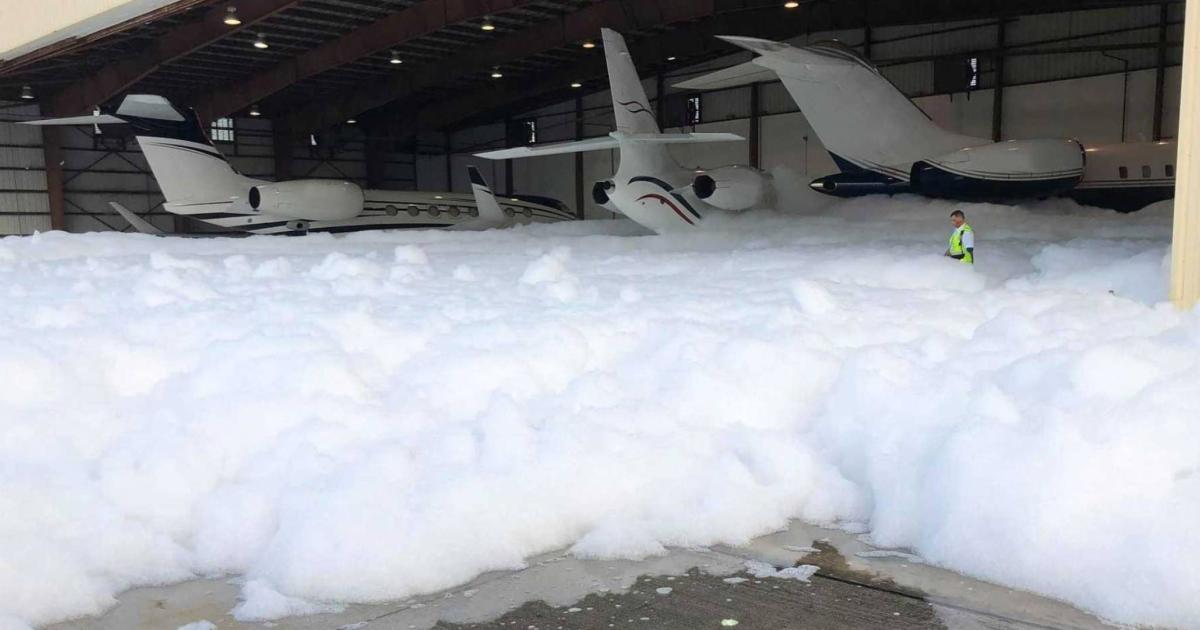
Large aircraft hangars at airports throughout the country are required to have foam fire suppression systems installed. These systems are designed to very quickly extinguish extremely volatile fires in hangars from flammable aircraft fuel by discharging massive volumes of foam.
Unfortunately, experience has shown that these complex systems pose very significant risks. This is particularly concerning to the aircraft industry since the majority of foam fire suppression system discharges in hangars are inadvertent, occurring without the presence of fire. This was highlighted by the landmark University of Maryland study “Review of Foam Fire Suppression System Discharges in Aircraft Hangars”. The study showed that most of these discharges should not have occurred and yet they are occurring with greater frequency.
These systems discharge enormous amounts of foam very quickly. They pose a serious risk of personal injury. At least two deaths – one in Florida and one in Ohio – are known to be related to discharges. The cleanup costs of inadvertent discharges can be staggering, estimated to average over $700,000 per incident. Many result in millions of dollars of losses.
The National Fire Protection Agency recently amended certain requirements found in NFPA 409 Standard for Aircraft Hangars to address some of these concerns.
Milligan Pusateri has experience investigating and litigating issues surrounding the complex foam fire suppression systems in aircraft hangars. The firm is able to represent clients with claims involving injury or death due to a discharge as well as those with monetary injury such as property owners and insurers with subrogation claims.
Milligan Pusateri can assist you in determining what caused the discharge and holding those responsible for the enormous cost involved.
Please contact any one of our lawyers experienced in these matters with questions you may have.
Daniel D. Eisenbrei
Anthony E. Brown
Richard S. Milligan